What began as a disputed intervention on student placement has evolved into a broader national conversation involving lawmakers, professionals and ordinary citizens. The exchange has expanded beyond admissions policy to questions of leadership responsibility, public spending and long-term investment in learning institutions.
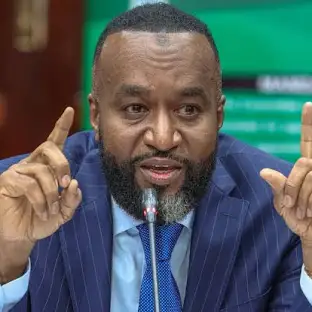
DCP party leader Rigathi Gachagua/HANDOUT
DCP party leader Rigathi Gachagua appears to have struck a chord with a growing section of Kenyans following his remarks that local Grade 10 students should be prioritised during placement in national schools within their regions.
The sentiments, initially criticised by a cross-section of leaders as potentially undermining national cohesion, are increasingly drawing public backing, particularly online.
ADVERTISING
Gachagua questioned a system in which parents and communities invest heavily in improving local schools, only for their children to be placed in distant institutions that, in some cases, face challenges in performance and infrastructure.
The former deputy president described the trend as unfair and associated the uneven development of schools in regions such as North-Eastern with leadership gaps and accountability concerns.
“Since revenue is shared equitably, why would some regions in Kenya have national schools that exist only by name — just shells?” he posed.
His remarks were widely interpreted by critics as advocating for ethnic-based allocation of school slots, an interpretation he dismissed as inaccurate and misleading.
“I’m not insisting, and I cannot, that children from a certain area must go to schools domiciled there. No. What I’m saying is that where schools are domiciled, children from that area who qualify must be given an opportunity,” he said.
Kakamega Senator Boni Khalwale was among the first leaders to support Gachagua’s views, arguing that the discussion should focus on accountability in the use of public funds.
“Listening to Gachagua with sobriety, he actually raised a valid and not tribal point. I strongly believe national schools should reserve 30 per cent of admission slots for students from local communities,” Khalwale said on X.
The outspoken lawmaker expressed the view that some leaders from former Northern Frontier counties have faced challenges in fully utilising devolved resources, with implications for learning infrastructure.
“As for the use of NG-CDF by MPs, and by extension, devolved funds by some governors from the former Northern Frontier Districts, let us not sugar-coat anything. Leadership choices matter. Period,” he said.
Khalwale accompanied his remarks with a photo of a girl in a school, showing facilities in need of improvement, which he said illustrated broader development concerns in parts of the region.
Public reaction quickly followed. “Well said, Daktari. I fully support this,” one Kenyan wrote. “How can critics call Gachagua tribal when questions are raised about how devolved funds are prioritised? The Kotulo picture tells the story. Time for accountability.”
City lawyer Ahmednasir Abdullahi also weighed in, saying the concerns raised by Gachagua warranted public discussion.
“Rigathi Gachagua is right when he raises questions about how public funds allocated to Northern Kenya have been utilised since devolution started in 2013,” he said.
ADVERTISEMENT
“Look at (some counties in northern Kenya). How have the billions allocated translated into development? Gachagua is playing politics, but when he talks about leadership responsibility and outcomes, he is raising issues worth examining, and I support that,” he added.
Other Kenyans echoed similar sentiments, calling for closer scrutiny of elected leaders to ensure devolved and constituency funds result in tangible development at the grassroots.
“Hii mambo ya national schools sasa itabidi tuambiane ukweli,” one person said in a video message, loosely translated as a call for honesty in the debate on national schools.
“There is a lot of hypocrisy. When Rigathi Gachagua speaks, he is labelled tribal. Yet some leaders are cited for prioritising school development while others face questions over different investment choices,” he added.
The speaker cited development records by Kiharu MP Ndindi Nyoro and Kikuyu MP Kimani Ichung’wah, pointing to institutions such as Mang’u High School and Alliance Girls as examples of sustained investment in education.
“During selection time, students are placed across regions. MPs who focus on school development make deliberate choices. Others prioritise different projects. Let people continue learning under trees, and next time they will elect leaders who can help them,” he said.
Another commenter called for oversight into the use of public funds. “Public resources must be accounted for. There’s no way taxpayers’ money should raise questions without answers,” they wrote.
United Opposition co-principal and Wiper Party leader Kalonzo Musyoka also joined the broader conversation, urging Kenyans to use the ballot to demand better leadership.
Speaking on Saturday during a burial in Machakos, Kalonzo said meaningful development depends on leaders who prioritise service over personal gain.
“Our country needs leaders who serve the people, not politicians who prioritise personal wealth, build roads to their homes, and leave citizens to suffer,” he said.
Nyoro, seemingly responding to praise of his development record, posted images of ongoing paving works at Gakuyu Primary School in Kiharu.
“We previously built an administration block through Kiharu NG-CDF funding. Grass and landscaping will be done during the rainy season,” he said.
ADVERTISEMENT
Gachagua, meanwhile, said he would persist in pushing for accountability and fairness in the education sector.
“I have received overwhelming support from Kenyans. All children deserve equal treatment. The issue I raised — and will continue to raise — is that there must be fairness in the placement of children in national schools,” he said.